
SEO
During my career, I have been exposed to many different areas of SEO which has taught me not only the importance of SEO but different techniques that can be used to optimise this. I have used these techniques in a number of scenarios with the aim of helping the site rank better on the search results page and as a result push more traffic to the site.

Part of my job role here at Datacentreplus involves managing and maintaining the company’s WordPress CMS, and part of this involves ensuring the SEO on the site is optimised.
One tool that I use to help me do this is Yoast SEO. This highlights the key areas on a post or page that I need to address in order to help the page’s SEO.
Focus Keyphrase – This is the keyword or keyphrase you want the search engine to focus on in the aim for it to rank the highest. This will allow you to rank higher on the search results page on the desired search terms/phrases.
SEO Title – This is a snippet of what your page or post contains, this is however different to a heading of the site. It is usually the first thing that a user will see when searching for your site so it is important to have all the key information there to draw the user in.
Slug – The slug is part of the URL that differentiates the post or the page from the main site. To optimise this first of all it’s a good idea to include the focus keyphrase on that page, keeping the slug concise but descriptive is the best way to optimise this.
Meta Description – This is the HTML tag associated with the post or page on your site. The main purpose of this is to generate click-throughs from search engines. Similar to the other areas the key to this is to keep it concise but descriptive, using plenty of keywords and calls to action is detrimental to a successful meta description.
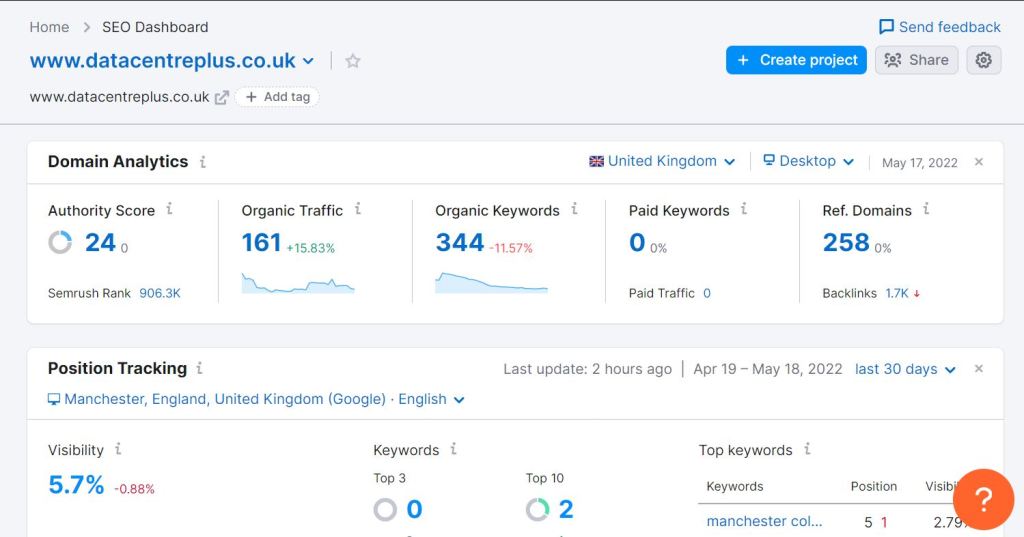
Another tool I use is SEMrush. This software will crawl the site and report back data on all areas such as Traffic, keywords, backlinks, SEO and site health.
Traffic: By having data on the traffic it allowed me to view where it was coming from and what areas on the site they visited. From this I was able to determine geographically the
Keywords: the keywords allow me to identify the keywords associated with our site and which words we can use to help boost our SEO ranking

Backlinks: Backlinks are where are where someone has linked to your site from their site. This not only helps lead people to your site but also boosted the SEO ranking.
SEO: SEO is how your site ranks on a search engine. This is ranked by a number of things but usually is down to how credible your site is and what keywords/areas you cover. Having a good SEO ranking will place your site higher up on the search results page which in turn should push more traffic to your site.
Site Health: Your site health is a score based on your site performance and if there are any errors on your site amongst other factors. A good site health should result in better SEO ranking.
This also indicates if you have any broken links on your site. I used this to discover that there was a large amount of broken links on the Datacentreplus website and by installing a plugin was able to either redirect or remove these broken links which improved the sites health which in turn boosted the sites SEO.
 Portfolio